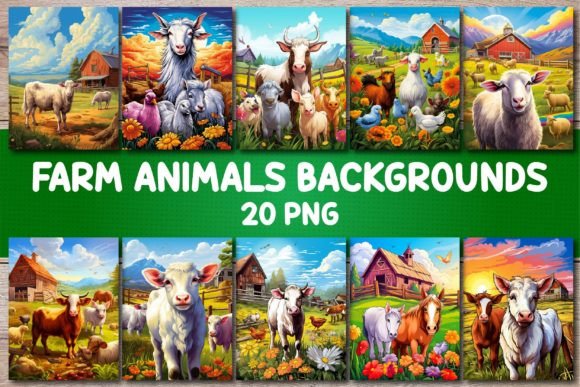
Charming Book Covers with Farm Animals Backgrounds
Understanding the Core Appeal of These Rustic Design Assets
When you are building a brand or publishing a coloring book, the cover is the handshake. It is the first thing a potential customer sees, and it has to convey a specific feeling instantly. This collection of Farm Animals Backgrounds for Covers is not just a set of random images; it is a toolkit for evoking nostalgia, comfort, and the organic warmth of the countryside. These designs work because they tap into a universal desire for simplicity. In a digital world full of sharp edges and neon gradients, the soft textures and natural elements found in farm life offer a visual break that feels therapeutic.
The visual language here is distinct. You are working with elements that suggest life, growth, and heritage. Whether it is the subtle texture of hay, the silhouette of a barn, or the gentle presence of livestock, these backgrounds provide a narrative canvas. For a designer, this means you don’t have to build an atmosphere from scratch. The "personality" of these assets is grounded, honest, and approachable. This makes them particularly effective for projects that aim to lower the viewer's stress levels or invite them into a story without using words. It is about creating an environment before the viewer even reads the title.
Strategic Applications: Where This Bundle Fits Best
While the immediate application for these backgrounds is KDP coloring book covers, their utility extends far beyond that. If you are a content creator or a small business owner, think about the visual consistency across your platforms. These assets are perfect for social media graphics where you want to establish a "slow living" or "cottagecore" aesthetic. Imagine using a soft-focus farm scene as the background for a text-heavy Instagram post about mindfulness or a Facebook ad for a local farmer's market. The background supports the message without competing with it.
In the realm of digital print and packaging design, these backgrounds can serve as a subtle texture layer. For a brand identity centered on organic products, artisanal crafts, or even children's educational materials, a farm-themed background adds a layer of authenticity. It signals to the customer that the product is rooted in something real. You can also use these for:
- Editorial design for lifestyle blogs or magazines focusing on gardening and DIY projects.
- Web design headers for agricultural businesses or bed-and-breakfast websites.
- Invitations and stationery for rustic weddings or farm-to-table dinner parties.
- Merchandise like tote bags or mugs, where a scenic wrap-around print can be very effective.
Technical Quality and the Importance of High-Resolution Assets
One of the biggest challenges in graphic design is finding assets that hold up under scrutiny. There is nothing worse than a pixelated logo or a blurry background on a printed book cover. This bundle addresses that common frustration by providing 20 PNG files at 300 DPI. For those unfamiliar with print terminology, DPI stands for "dots per inch." At 300 DPI, these images are optimized for professional printing, ensuring that the lines are crisp and the colors are vibrant when the final product is in a reader's hands.
Because these are digital paper assets, they are incredibly versatile for layering. In software like Photoshop or Canva, you can easily overlay your typography, line art, or illustrations on top of these backgrounds. The quality ensures that even if you need to crop in tightly on a specific section of the background, the integrity of the image remains intact. This is crucial for logo design integration or when creating a massive bundle design where consistency across multiple volumes is key.
Aligning Visuals with Audience Psychology
Design is ultimately about communication. When you choose a Farm Animals Background for Cover, you are making a psychological promise to your audience. You are promising them a break from the high-tech, high-stress world. This is particularly relevant for the adult coloring book market. Your target audience—adults looking for stress relief, mindfulness, and art therapy—is seeking a specific emotional outcome. They want to feel grounded.
The "rustic beauty" mentioned in the product description is a functional design feature. It helps set the stage for therapeutic coloring. If your cover looks chaotic or overly complex, it might subconsciously signal stress rather than relief. However, a well-chosen farm background suggests open spaces, fresh air, and a slower pace. This helps the viewer associate the activity inside the book with relaxation. As a publisher or designer, understanding this connection allows you to market your product more effectively. You aren't just selling a book of pictures; you are selling a mental vacation.
Practical Guidance for Choosing and Testing Your Design
Before committing to a specific background from the set of 20, it is wise to evaluate the fit for your specific project. Don't just pick the prettiest one; pick the one that serves your layout. Here is a practical approach to working with this bundle:
- Evaluate the Focal Point: Look at the negative space in the background. Is there a clear area where your title will sit? For creative font pairings—perhaps a script font or handwritten font for the title—you need a background that isn't too "noisy" in that specific area to ensure readability.
- Test for Contrast: If you are using a dark serif font or sans serif font, you need a lighter section of the background. If your background is busy, consider adding a semi-transparent shape or "knockout" behind your text to maintain a professional visual hierarchy.
- Check Color Harmony: The natural tones of farm scenes (greens, browns, reds, blues) are generally easy to work with. However, ensure your text color complements the dominant hue of the background rather than clashing with it.
- Mock it Up: Don't just look at the file in isolation. Place your title, subtitle, and author name on it. See how the composition feels as a whole. Does it look like a book you would pick up?
Leveraging Assets for Brand Consistency
If you are creating a series of coloring books or a set of related products, using assets from the same family ensures brand identity consistency. This mega bundle design offers enough variety to create distinct covers for different volumes while maintaining a cohesive look on the shelf or in a digital storefront. For example, you might use a chicken-themed background for Volume 1 and a pastoral barn scene for Volume 2. The style remains consistent, signaling to returning customers that this is part of a series they already trust.
Furthermore, consider the commercial font licensing and the usage rights of the backgrounds. Since these are designed for commercial use, you can confidently use them for products you intend to sell on platforms like Amazon Kindle Direct Publishing. This removes the legal guesswork often associated with sourcing images from the internet. You have a clear path to creating high-quality coloring backgrounds that are safe to monetize.
Final Thoughts on Creative Expression
Ultimately, tools like these backgrounds are enablers. They remove the technical barriers to entry, allowing you to focus on the creative expression and the story you want to tell. Whether you are an entrepreneur launching a new line of coloring books for adults, a blogger sprucing up a website, or a crafter making personalized gifts, the value lies in the professional polish these assets bring. They transform a simple idea into a tangible, market-ready product that resonates with the timeless charm of farm life.