Abstract Backgrounds of Color Pieces: A Designer's Playbook
The Visual Language of Fragmented Color
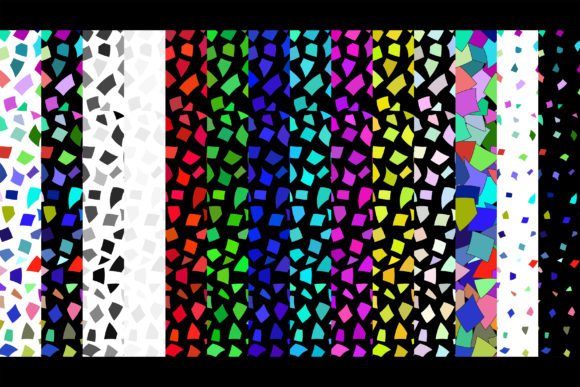
When you first look at the Abstract Backgrounds of Color Pieces collection, you’re not just seeing a set of textures; you are looking at a toolkit for modern visual communication. This pack is built around the aesthetic of deconstruction—small, sharp shards of paper or ceramic splinters scattered across a field. The visual personality here is distinctly contemporary and tactile. It evokes a sense of organized chaos, mimicking the look of confetti, shattered glass, or mosaic tiles, but with a soft, paper-like finish that feels approachable rather than dangerous.
The appeal lies in the "pieces" themselves. Unlike a flat, gradient background, these assets provide physical depth. You can almost feel the edges of the grey, red, yellow, green, light blue, blue, purple, and multicolor fragments. This texture is crucial in an era where digital design often feels sterile. By incorporating these high-resolution raster and vector files, you bridge the gap between the screen and the physical world. It’s a premium font equivalent for backgrounds—high-quality, versatile, and immediately professional.
Strategic Applications for Modern Brands
Understanding where to deploy Abstract Backgrounds of Color Pieces is about recognizing the need for energy in your design hierarchy. This isn't a static asset; it’s a dynamic design element that influences how an audience perceives your brand identity.
Digital Dominance: Web and Social
In the realm of web design and social media graphics, attention spans are short. These backgrounds serve as perfect hero sections for landing pages, offering a burst of color that can be tuned to match specific brand palettes. For content creators and bloggers, the multicolor and specific hue variations (like the light blue or purple) are excellent for creating cohesive Instagram grids or YouTube thumbnails. Because the pack includes 16:9 aspect ratio JPGs, they are ready-made for video backgrounds or presentation decks, ensuring your visual hierarchy remains strong without distracting from your typography.
Editorial and Packaging Design
For publishers and editorial designers, these backgrounds solve the "white space" problem without cluttering the layout. Imagine a magazine cover or a book chapter header where the text sits atop a subtle scattering of grey or blue pieces. It adds a layer of sophistication and texture that flat colors cannot achieve. In packaging design, particularly for cosmetics, tech accessories, or artisanal goods, the ceramic or paper splinter look suggests craftsmanship and detail. It tells the customer that the brand cares about the nuances, much like a carefully selected serif font or script font would.
Marketing and Brand Consistency
Consistency is key in marketing. With 14 different color variations available in both vector (.ai, .eps) and raster (.jpg) formats, you can maintain a unified look across different mediums. A startup might use the yellow pieces for their energetic social media campaign, the grey for their corporate pitch decks, and the multicolor option for event flyers. This versatility ensures that whether you are designing a logo, a business card, or a billboard, the underlying visual language remains recognizable.
Practical Guide to Implementation
Simply having a good asset isn't enough; you need to know how to wield it. Here is how to get the most out of the Abstract Backgrounds of Color Pieces in your workflow.
Typography and Pairing
The visual "noise" of the scattered pieces requires careful font pairing. Because the background is textured and fragmented, it demands a typeface that is clean and legible. Avoid overly complex script fonts or handwritten fonts for body copy, as they will get lost in the shards.
Instead, lean towards a sturdy sans serif font or a bold display font for headlines. The geometric shapes of a sans serif font will contrast nicely with the organic edges of the paper or ceramic pieces. For example, pairing a heavy, modern sans serif with a multicolor background creates a high-energy, youthful vibe suitable for a festival poster. Conversely, using a classic serif font over a muted grey background can create a sophisticated, high-fashion editorial look.
Color Theory and Selection
Don't just pick a background because it looks pretty; pick it based on color psychology.
- Red and Yellow: Use these for calls to action, sale announcements, or brands that want to convey urgency and excitement.
- Blue and Light Blue: These are excellent for tech, finance, or wellness brands. They provide a sense of trust and calm, even with the active texture.
- Green: Ideal for eco-friendly products, organic foods, or financial growth themes.
- Grey: The ultimate neutral. Use this when you want the texture to support the content without influencing the color mood of the text.
Technical Workflow and Licensing
The inclusion of vector files (.ai CC and .eps 10) is a significant advantage for professional designers. While the JPGs are great for quick mockups or web use, vectors allow you to scale the pieces to any size without losing resolution. This is vital for large-format printing, such as trade show banners or vehicle wraps.
However, always check the specific commercial licensing terms provided with the pack. While these assets are designed for commercial use, understanding the restrictions on resale or distribution of the raw files is part of professional due diligence. Treat these assets with the same care you would a premium font license.
Testing and Evaluation
Before finalizing a design, test the readability. Zoom out on your screen or print a small test strip. Can you read the headline clearly against the background? If the pieces are too high-contrast or too dense, they might fight with your text. In such cases, consider using the background only on the perimeter of the layout or applying a slight blur or overlay to the pieces to push them back in the visual hierarchy. The goal is to use the Abstract Backgrounds of Color Pieces to enhance the message, not compete with it. By treating these backgrounds as active design partners rather than just "wallpaper," you elevate the quality of your creative output.